
Melting Arctic ice is exposing rare metals and shipping routes that are reshaping global power
Key takeaways
- Greenland holds rare metals used in smartphones, electric vehicles and defence systems.
- China currently dominates the mining and refining of these minerals. That leaves countries like Canada and the United States dependent on decisions made in Beijing.
- Greenland offers another potential source, which is why global powers are paying attention. Who controls those resources affects the supply chains Canadians rely on.
- Melting Arctic ice is also opening faster shipping routes between Asia and Europe. Shorter routes can change trade flows and influence the cost and movement of goods.
- The Arctic is becoming a security hotspot. Canada shares this region, so rising competition there has direct implications for Canadian sovereignty, defence and economic interests.
What’s this?

Greenland has become the centre of a new geopolitical scramble. As melting ice exposes rare metals and opens Arctic shipping routes, the United States, China and NATO are positioning for control of a territory that could reshape global power.
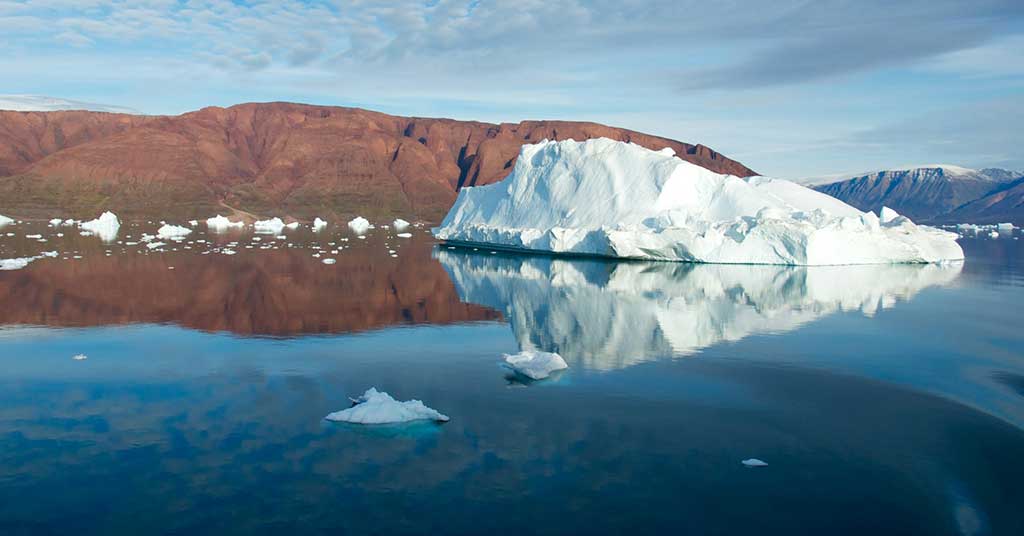
The reason is simple: the Arctic is heating roughly four times faster than the global average. Between 2002 and 2016, Greenland lost an estimated 269 to 300 gigatons of ice per year, making it one of the largest contributors to global sea-level rise. As the ice retreats, it is exposing significant mineral deposits beneath the surface.
An estimated 1.5 million tons of rare metals lie under Greenland, according to geological assessments of its untapped reserves. These materials are essential to modern economies and modern militaries. They power smartphones, electric vehicles, missiles, superconducting motors, advanced radar systems and solar panels.
Greenland’s deposits include at least 25 of the 60 metals the U.S. has identified as critical to its security and prosperity. In an age of technological rivalry, that is not a footnote. It is leverage.
The U.S. already maintains a military presence in Greenland, an autonomous territory within the Kingdom of Denmark, a NATO member. Pituffik Space Base, formerly Thule Air Base, is a central node in America’s missile warning and space surveillance network. Greenland has long mattered to Washington. Now it matters more.
China dominates rare earth supply chains. Roughly 60 to 70 per cent of these metals are mined in China, and about 90 per cent of global refining capacity is located there. Beijing has shown it is prepared to use that dominance. When Washington imposed tariffs on Chinese goods, China responded by announcing restrictions on rare earth exports to the United States, signalling that access to critical minerals could be curtailed in retaliation.
That reality leaves Western economies exposed. Greenland offers another source. Control over its deposits would reduce dependence on China and rebalance economic and technological power.
Minerals are only half the story. The melting of the Greenland ice sheet is also opening Arctic waters to commercial shipping. For several months each year, roughly July to October or November, vessels can navigate routes that shorten transit times between Asia and Europe by 40 to 50 per cent. A voyage from Japan to Europe could take about 10 days instead of the 22 to 29 days required via traditional routes such as the Suez Canal.
Shorter routes mean lower costs, faster trade and new strategic options. They also mean new choke points.
Geography alone will not decide who benefits. Infrastructure will. Refuelling ports, satellite systems and search-and-rescue capabilities would need to be built across remote territory. Whoever shapes that network shapes access.
Security realities are changing just as quickly. What was once a frozen buffer is becoming a zone of strategic competition. Russia could expand submarine operations beyond the Barents Sea, and civilian, fishing and research vessels could monitor or threaten NATO’s critical undersea infrastructure in the Greenland-Iceland-United Kingdom gap, a strategic maritime corridor in the North Atlantic.
For NATO, the Arctic is no longer peripheral. It is a frontline. For Washington, Greenland is not a distant island. It is a forward position in a tightening contest over trade routes, resources and military reach.
That explains renewed American interest and the resistance it has triggered. Greenlanders and Denmark have made clear that Greenland is not for sale. Canada has signalled support for Greenland’s sovereignty and right of self-determination, while facing similar sovereignty and resource pressures in its own Arctic.
The race for Greenland is not symbolic. It is about breaking China’s grip on critical minerals, securing emerging Arctic corridors and strengthening NATO’s northern flank.
The old world order is not coming back. Greenland is a warning of what comes next: harder competition over resources, routes and strategic position in a world where climate change is accelerating geopolitical rivalry.
Toronto-based Rashid Husain Syed is a highly regarded analyst specializing in energy and politics, particularly in the Middle East. In addition to his contributions to local and international newspapers, Rashid frequently lends his expertise as a speaker at global conferences. Organizations such as the Department of Energy in Washington and the International Energy Agency in Paris have sought his insights on global energy matters.
Explore more on Arctic, Climate Change, Mining, NATO, National security
The views, opinions, and positions expressed by our columnists and contributors are solely their own and do not necessarily reflect those of our publication.
Troy Media empowers Canadian community news outlets by providing independent, insightful analysis and commentary. Our mission is to support local media in helping Canadians stay informed and engaged by delivering reliable content that strengthens community connections and deepens understanding across the country.

