
Mexico swallowed the insults and kept its market access. Canada performed its outrage and drew a punishing U.S. tariff wall
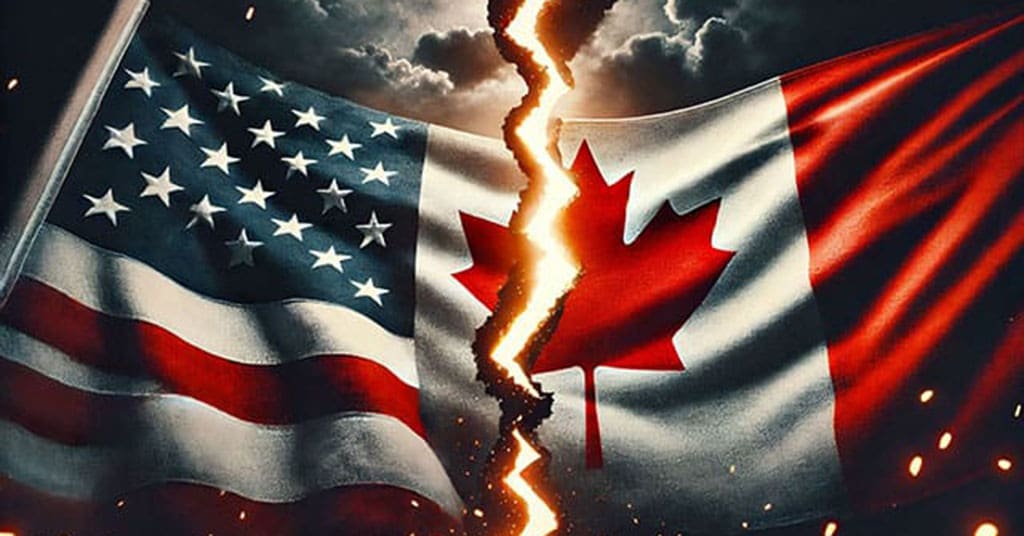
Two neighbours face the same difficult customer, but they have handled him very differently. Mexico swallowed U.S. President Donald Trump’s insults, negotiated and preserved most of its access to the U.S. market. Canada answered Trump with public displays of defiance and now faces new tariffs.
Mexico received the worse insults. Trump told Fox News in January that Mexico is a narco state, promising a military incursion. He renamed the Gulf of Mexico the Gulf of America and revived the wall at the border.
But Mexico kept negotiating. It concluded its third round of bilateral talks with Washington in late July, with a fourth round set for September. Some 85 per cent of Mexican exports still enter the U.S. tariff-free, as Mexican Economy Secretary Marcelo Ebrard repeatedly points out.
Canada, by comparison, faced Trump’s taunts about becoming the 51st state but has yet to begin formal negotiations with Washington. On Aug. 19, it becomes the first target of Section 338 of the Tariff Act of 1930 in the law’s near-century of existence: a 50 per cent duty on roughly US$20 billion in dairy, alcohol and hundreds of other tariff lines. There is no expiry and no relief for CUSMA-compliant goods, which normally qualify for duty-free treatment under the continental trade agreement.
The country that swallowed the crudest insults kept the market. The country that performed its outrage got the tariff.
Mexico did more than remain calm. It gave Washington something it wanted. President Claudia Sheinbaum sent 10,000 National Guard troops to the border in February 2025. Her government handed 29 cartel capos to American justice in a single night and 26 more in August.
Call it capitulation, and you miss the design. Mexico paid in its cheapest currency: security cooperation it largely wanted anyway, against cartels that murder Mexicans and kill Americans.
Canada, for its part, paid in its most expensive currency, taxing its own consumers through counter-tariffs, then surrendered its real concessions free of charge. Canada’s tax on large digital companies died in a weekend. Most Canadian counter-tariffs quietly came off last September. None of those concessions brought relief on autos, dairy or alcohol.
One country transacted. The other performed patriotic indignation, then paid for it.
Ideology does not explain the difference. Sheinbaum belongs to Morena, a left-wing party. Her government managed economic growth of just 0.6 per cent last year while accumulating record debt. Canada’s left-wing Liberals doubled the federal debt and presided over what the Royal Bank calls the largest capital exodus in Canadian history, with more than $1 trillion leaving between 2015 and 2024. Both governments weakened their negotiating hands.
The real difference is political. Sheinbaum does not need confrontation with Trump to sustain herself at home. Her approval rating is high, her coalition holds a lower-house supermajority and her voters are tied to the American economy through remittances and factory work.
She corrects Trump at her daily press conference, then sends Ebrard to Washington. Ebrard calls his posture “modo zen,” Spanish for “Zen mode.” The restraint costs her little politically and buys her considerable commercial advantage.
Prime Minister Mark Carney faced the opposite arithmetic. His government owes much of its political success to the anti-Trump sentiment it promoted and supported. The 2025 election was won on “Elbows Up.” A mandate built on confrontation must be serviced with confrontation.
That meant auto counter-tariffs and provincial liquor boards removing American alcohol from their shelves. Washington later cited those measures among its justifications for Section 338.
One government in Canada did behave like Mexico, and it sits in Edmonton. Alberta paused American liquor purchases in March 2025 and by June became the first province to restore them. When the 50 per cent threat landed this month, Premier Danielle Smith declined to repeat the theatre, telling Albertans the approach “has got to be measured” and “calm.”
Carney pulled the other way, asking provinces to keep American alcohol off the shelves.
None of this argues for capitulation. Restraint and surrender differ. Mexico did not simply give Trump what he wanted. It calculated what Washington valued, conceded where doing so also served Mexican interests and kept negotiating.
Canada can do the same. A serious strategy would stop the performances and pay in the cheapest currencies Washington values: continental defence, Arctic security, critical minerals and alignment on China, each something Canada needs anyway.
It should also dismantle the internal protectionism that gives Washington ammunition. Dairy belongs to Ottawa; liquor belongs to the provinces. That requires federal-provincial discipline so far absent.
The alternative is to confuse displays of national defiance with successful negotiation.
The mature nationalist swallows the insult and keeps the market. The performing nationalist returns the insult and loses it.
Dr. Marco Navarro-Génie is the Vice-President of Research and Policy at the Frontier Centre for Public Policy. An expert on radical revolutionary movements and political identity, he is a recipient of the King Charles III Coronation Medal for exemplary public service. He is the author of three books, including the 2023 release Canada’s COVID: The Story of a Pandemic Moral Panic, co-authored with Barry Cooper.
Explore more on Trade, Liberal government, Canada-US relations, Trump administration
The views, opinions, and positions expressed by our columnists and contributors are solely their own and do not necessarily reflect those of our publication.
Troy Media empowers Canadian community news outlets by providing independent, insightful analysis and commentary. Our mission is to support local media in helping Canadians stay informed and engaged by delivering reliable content that strengthens community connections and deepens understanding across the country.

