
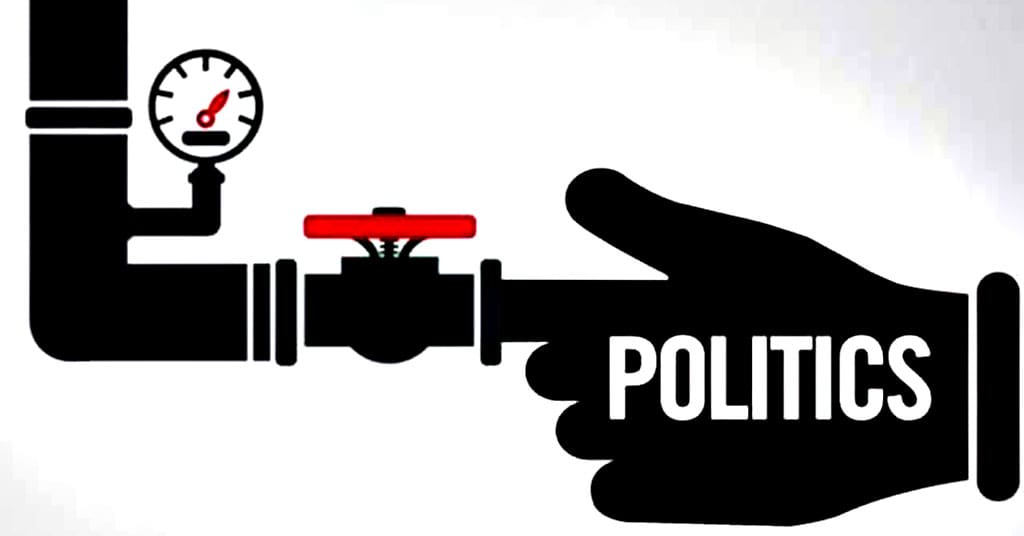
A second West Coast pipeline will finally give Canadian crude the global market access it deserves
After a decade of political paralysis, Canada may finally be moving toward a new West Coast oil pipeline.
Canada currently has only one major oil pipeline route to the Pacific coast through the Trans Mountain expansion. Another pipeline would give Canadian crude greater access to overseas markets at a time when diversifying exports away from the United States is becoming increasingly important.
The proposed new pipeline is no longer an “if” but a “when,” Alberta Premier Danielle Smith said confidently after a meeting with Prime Minister Mark Carney in Ottawa last Friday.
Disruptions through the Strait of Hormuz have exposed how fragile global energy markets can become, reinforcing why governments and industry are once again prioritizing energy security, energy executives told CNBC. The world is now looking for reliable producers to fill the gap, and Canada has the oil and gas reserves to help fill the gap.
Currently, Canada still exports most of its oil and gas to the U.S. Because Canada lacks enough infrastructure to export energy overseas, Canadian producers often sell at discounted prices into the U.S. market. Major pipeline projects have faced years of political opposition, regulatory delays and cancellations. In recent years, though, the energy industry has pushed for expanded exports, and the federal government has recently begun supporting that push.
Olivier Le Peuch, CEO of the oilfield services company SLB, and Baker Hughes CEO Lorenzo Simonelli told CNBC the Hormuz disruptions had exposed the fragility of the global energy system and would force governments and industry to prioritize energy security.
But “it’s not just about increasing energy supply,” Simonelli said. “It’s about building robust and resilient energy infrastructure and greater redundancy, diversifying infrastructure, and reducing reliance on any single large-scale asset.”
Canada has a “golden opportunity” to become a major global oil player as the war in the Middle East limits sources of crude and natural gas, Fatih Birol, head of the International Energy Agency, told Bloomberg. “The cost of missing this train will be incredible.”
Birol said the war had removed millions of barrels per day from global supply, and reliability has gained even more prominence for importers of energy commodities. After the war ends, Birol said there would be an “energy security risk premium,” and that “the most important resource, or card, that Canada has today is trust.”
“Canada doesn’t have the luxury to be slow,” Birol added. “I wish there were a few more Canadas in the world, so that we can have a much more reliable and sustainable global energy system.”
But Canada will have to change course if it wants to seize that opportunity, industry leaders are warning. Jon McKenzie, Cenovus’s CEO, told analysts on Wednesday that Canada’s national conversation around oil sands development has become “myopically focused on the climate agenda” and that the consequences are already playing out in the investment numbers. The country, he argued, has spent over a decade making itself one of the least attractive places on Earth to build new oil production.
Numbers back him up, writes Charles Kennedy of Oilprice.com. Only one new greenfield oil sands project has been approved and built in Canada since 2013, even though global oil demand has continued to grow.
Our carbon tax policy is largely to blame, McKenzie said. “The industrial carbon tax is unique to Canada,” he said, adding that it gives companies a stronger incentive to invest abroad. Canada is one of the few oil-producing nations to levy such a charge on its energy industry, one reason, he said, that capital has been steadily migrating toward the U.S. and parts of the Middle East, where approval processes are shorter and operating costs are lower.
The unresolved carbon pricing talks aren’t the only thing creating headaches for the sector. Earlier this year, Canadian Natural Resources deferred its US$6-billion Jackpine carbon capture expansion at its Albian oil sands site, citing “lack of finalization of government regulatory policies” around carbon pricing and methane. The project is on hold until the rules are clear.
The crisis in the Middle East has created an opening for Canadian energy exports. Building new export pipelines beyond the U.S. would strengthen Canada’s economy while helping provide greater energy security to global markets.
We must grab the opportunity, and with both hands.
Toronto-based Rashid Husain Syed is a highly regarded analyst specializing in energy and politics, particularly in the Middle East. In addition to his contributions to local and international newspapers, Rashid frequently lends his expertise as a speaker at global conferences. Organizations such as the Department of Energy in Washington and the International Energy Agency in Paris have sought his insights on global energy matters.
Explore more on Energy sector, Canadian economy, Pipelines, Energy security
The views, opinions, and positions expressed by our columnists and contributors are solely their own and do not necessarily reflect those of our publication.
Troy Media empowers Canadian community news outlets by providing independent, insightful analysis and commentary. Our mission is to support local media in helping Canadians stay informed and engaged by delivering reliable content that strengthens community connections and deepens understanding across the country.

