
The record of foreign intervention is bleak. Political change lasts only when it is driven by the people who live there

Last month marked the 40th anniversary of the People Power Revolution in the Philippines, the 1986 uprising that ended the two-decade dictatorship of Ferdinand Marcos Sr., a bloodless, indigenous, and very effective regime change.
And in an age where countries with powerful armies view regime change in foreign lands as justification for violence, it is worth reflecting on what the world can learn from this event.
I consider myself incredibly fortunate to have gone to university in the Philippines a few years before the People Power Revolution. President Ferdinand Marcos Sr. was the dictator at the time. Since it was during the Cold War and Marcos was an American ally, anyone who objected to his regime was labelled a communist.
As a Canadian used to free speech, I was shocked when students were uncomfortable engaging in political debates in the classroom, and then I learned about disappearances, shootings, and curious “accidents” that happened with regularity.
When my friends knew that there were no informants around, they talked to me about what was happening in their country. They were well-educated and skilled in critical thinking. They also made very effective use of humour.
While I enjoyed talking with my Filipino friends, I was very aware that as a foreigner, I needed to listen and learn. I had absolutely no right to advise them about how their country should be run. To me, this is simply common sense.
A few years after I left, the world stood in awe when, after a contested presidential election result, throngs of Filipinos confronted the military armed only with flowers and prayer beads.
U.S. President Ronald Reagan wisely remained silent, and Marcos was powerless. He left the country and Corazon Aquino, his opponent in the election, became the new president of the Philippines, bringing back democratic government after years of authoritarian rule.
The lesson from the People Power Revolution is clear. History offers few examples where foreign intervention—through sanctions, embargoes, blockades or violence—improved life for the citizens of a country. In fact, these actions often inflict tremendous suffering on the people living there. History repeatedly shows that attempts by outside powers to force political change often make conditions worse for the people living there.
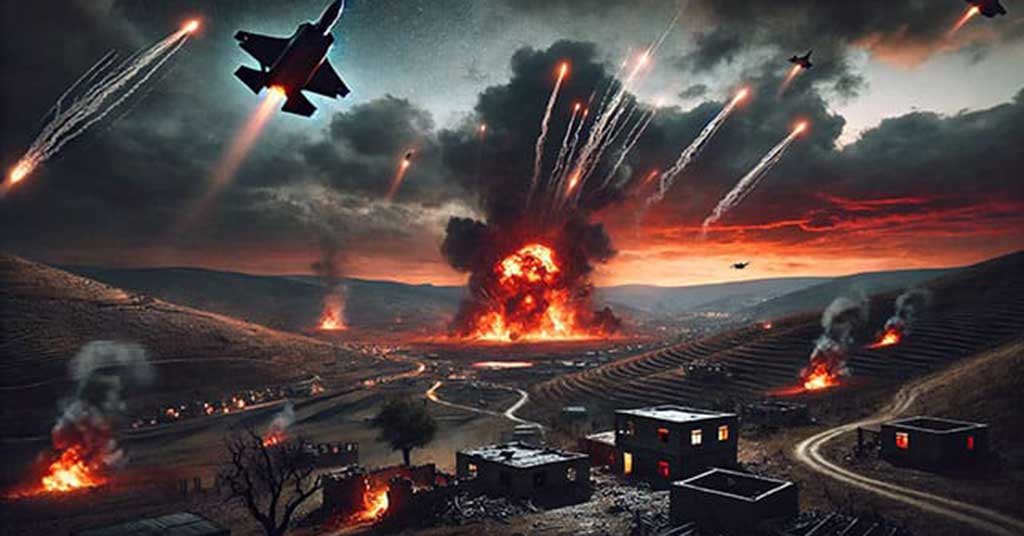
This lesson is relevant far beyond the Philippines. In the case of outside efforts to bring about regime change in Iran, it seems very odd that foreigners who express concern about the freedom of the people of Iran are so willing to risk Iranian lives. On the first day of the latest military assault on Iran, reports said an elementary school was blown up, tragically killing more than 100 schoolgirls. Iranian authorities blamed the United States and Israel for the strike, though responsibility remains disputed.
The people of Iran, like the people of the Philippines, are well educated. They live under a political system dominated by religious authorities and powerful security institutions and are fully capable of deciding how they want to be governed. Political change is far more likely to last when it is driven by a country’s own citizens rather than imposed from outside.
The confirmed death of Iran’s supreme leader, Ayatollah Ali Khamenei, who had served as Iran’s supreme leader since 1989, does not appear to have had the impact outside observers were hoping for. For many Shiite Muslims, he will be viewed as a martyr, and his death will likely strengthen resistance to what many will see as foreign aggression.
Whatever the outcome of the conflict, lasting political change in Iran, if it occurs, will ultimately depend on the choices made by the Iranian people themselves.
Sustaining a war also requires public support. In the U.S., public opinion polls show more Americans oppose the war in Iran than support it, with younger voters especially skeptical.
Forty years after the People Power Revolution, life is not perfect in the Philippines. I was shocked when the population elected Ferdinand Marcos Jr., the son of the former dictator, as their president in 2022. Regardless of what I think of this choice, it is not my business as a foreigner to tell Filipinos how they should be governed.
Nor is it our business who governs Iran.
Gerry Chidiac specializes in languages and genocide studies and works with at-risk students. He received an award from the Vancouver Holocaust Education Centre for excellence in teaching about the Holocaust.
Explore more on Democracy, War/Conflict, Islamofascism
The views, opinions, and positions expressed by our columnists and contributors are solely their own and do not necessarily reflect those of our publication.
Troy Media empowers Canadian community news outlets by providing independent, insightful analysis and commentary. Our mission is to support local media in helping Canadians stay informed and engaged by delivering reliable content that strengthens community connections and deepens understanding across the country.

