
Iran spent decades provoking the world. Eventually, someone was going to punch back
The U.S. and Israel launched joint airstrikes on Iran on Feb. 28. Many senior Iranian leaders and military personnel have been killed over the past 10 days, while the number of casualties on the other side has been minimal. The war has been a great success thus far, although it’s hard to determine when this armed conflict will end. (U.S. President Donald Trump recently indicated it could be “very soon.”)
Some people still don’t understand, or simply refuse to accept, why this war with Iran is just and necessary. Let’s examine why.
Ruhollah Khomeini, a radical Shiite cleric who had lived in exile for 15 years, led a massive movement against Mohammad Reza Pahlavi, the Shah of Iran. The Iranian Revolution, which occurred between January 1978 and February 1979, included a large assortment of protests, demonstrations and riots in the streets. Khomeini and his followers were eventually able to overthrow the Shah and take control of the country.
Iran has since become the pure embodiment of evil. It’s a vicious theocracy and authoritarian state run by a supreme leader who is far more powerful than politicians, judges, law enforcement officials and mullahs combined. Iran has been one of the world’s biggest contributors to tyranny, authoritarian rule, terrorism, anti-Christian, anti-Jewish and anti-democracy sentiments—and more. It’s widely disliked by many of its Arab and Muslim neighbours, too.
Few countries despise Iran quite as much as the U.S. and Israel, and understandably so.
U.S.-Iran relations have been strained and troubled for decades. Most presidents, including Jimmy Carter, Ronald Reagan, George H.W. Bush, Bill Clinton, George W. Bush, Donald Trump and Joe Biden, kept their distance or fought back against Khomeini and his successor, Ali Khamenei. The one exception was Barack Obama, who didn’t particularly like the supreme leader but still foolishly tried to create a path to peaceful relations with this tyrannical regime. This is impossible to do with Iran, as most rational-thinking people would have known and most others now know.
Trump, upon his return to the White House, would have none of this. He regarded Khamenei’s Iran as a major threat to American and international safety and security. He withdrew the U.S. from Obama’s controversial Iran nuclear deal in May 2018, which he correctly depicted as a “disaster” and “one-sided” arrangement.
He knew that Iran had been designated as a state sponsor of terrorism by the U.S. in 1984. The State Department declared Iran to be a supporter of “terrorist and militant groups” in the Middle East like Hezbollah, and a country that’s “used the Islamic Revolutionary Guard Corps-Quds Force (IRGC-QF) to provide support to terrorist organizations, provide cover for associated covert operations, and create instability in the region.” Trump also revealed that Iran had attempted (and failed) to assassinate him, according to his Sept. 25, 2024, post on X.
Diplomatic relations between Iran and Israel were quite good when Pahlavi was in control. After the Shah was overthrown by Khomeini and his Islamic extremists, things soured almost instantaneously. The two countries haven’t had diplomatic relations since 1979. They did communicate in a covert fashion during the Iran-Iraq War between 1980 and 1988, however. The most notable moment was Operation Opera, in which Iranian intelligence fed to Israel led to the destruction of Iraq’s unfinished Osirak nuclear reactor in June 1981.
Iran’s position against Israel has become more violent and bloodthirsty over time. While the supreme leadership authority has espoused hatred and antisemitism against Jews and Israel for decades, it goes much further than this. The Islamic Republic wants to wipe the Jewish state off the map. “For decades, Iran’s regional policies aimed to establish regional hegemony and position Iran as Umm al-Qura, or ‘Mother of Cities’ of the Islamic world, through the destruction of Israel and the liberation of Palestine,” Saeid Golkar wrote for the Foreign Policy Research Institute on Oct. 30, 2025. “To achieve this, shaping the Axis of Resistance, proliferating Islamist militias, and advancing missile programs were tools used to reach these goals.”
Iran has had very few allies since the 1979 revolution, and those skimpy numbers have mostly vanished into thin air. There exists plenty of hatred for most other countries, be they democracies or otherwise. Don’t believe me? The Iranians have launched drones and ballistic missiles not only at U.S. and Israeli military bases during this armed conflict, but also at Bahrain, Iraq, Jordan, Qatar, Saudi Arabia, Turkey and the United Arab Emirates. That’s why few tears were shed when Khamenei and senior Iranian figures like Ali Shamkhani, Abdolrahim Mousavi, Aziz Nasirzadeh and Mohammad Pakpour were killed during the joint U.S.-Israeli attacks.
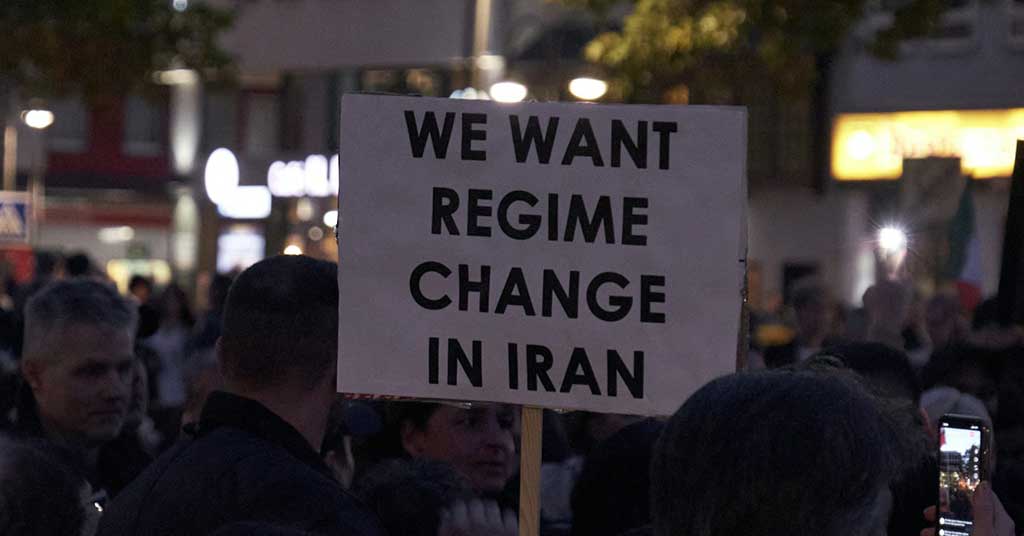
For all of the ridiculous chatter and outrageous lies that critics have said since the war began, ranging from “Iran isn’t an imminent threat” all the way to “America is fighting Israel’s war,” the world is clearly sick and tired of the Islamic Republic of Iran. While it’s obviously unfortunate that some innocent people will get caught in the crossfire, it’s unavoidable during a time of war and the necessary overthrow of this tyrannical regime.
The sooner the evil Islamic radicals are removed from power, the better.
Michael Taube is a political commentator, Troy Media syndicated columnist and former speechwriter for Prime Minister Stephen Harper. He holds a master’s degree in comparative politics from the London School of Economics, lending academic rigour to his political insights.
Explore more on Terrorism, Islamofascism
The views, opinions, and positions expressed by our columnists and contributors are solely their own and do not necessarily reflect those of our publication.
Troy Media empowers Canadian community news outlets by providing independent, insightful analysis and commentary. Our mission is to support local media in helping Canadians stay informed and engaged by delivering reliable content that strengthens community connections and deepens understanding across the country.

